


News and Articles
Case Study: Enhancing Import Consolidation with Put-to-Light Systems – When "Speed" and "Accuracy" Drive Logistics Excellence
The Challenge of Import Logistics and Speed-to-Market
In the fast-paced world of retail logistics, handling Import Goods presents a unique set of challenges. Given the long cross-border lead times, once merchandise arrives at the Distribution Center (DC), the primary objective shifts immediately to "Speed-to-Market." The goal is to distribute products to stores as rapidly as possible to maximize sales opportunities and align with seasonal demand.
Historically, our consolidation and pre-distribution processes relied on manual operations. However, as volume increased—particularly within the Fashion & Apparel category, known for its complex SKU variations (sizes, colors)—traditional methods became a significant operational bottleneck. To address this, the Warehouse Improvement Team initiated the "Import Pre-Dist Put-to-Light System" project to systematically re-engineer our workflow.
1. Problem Analysis: From Floor Stacking to Digital Sorting
Our "As-is" analysis of the previous operation revealed three critical Pain Points that necessitated immediate change:
Process Inefficiency: The traditional operation utilized a "Floor Stacking" method. Staff had to manually read orders and walk to place items in designated piles on the floor. This was labor-intensive and time-consuming, making it difficult to meet tight delivery schedules.
Accuracy & Complexity: Fashion merchandise requires high attention to detail. Visually distinguishing between sizes (S, M, L) or similar color shades creates a high risk for Human Error, especially under time pressure. Incorrect sorting leads to stock inaccuracies at the destination stores.
Ergonomic Concerns: The physical nature of floor stacking required staff to constantly bend and lift, leading to fatigue and back pain. This physical strain directly correlated with a drop in productivity towards the end of shifts.
2. The Solution: Implementing the Put-to-Light System
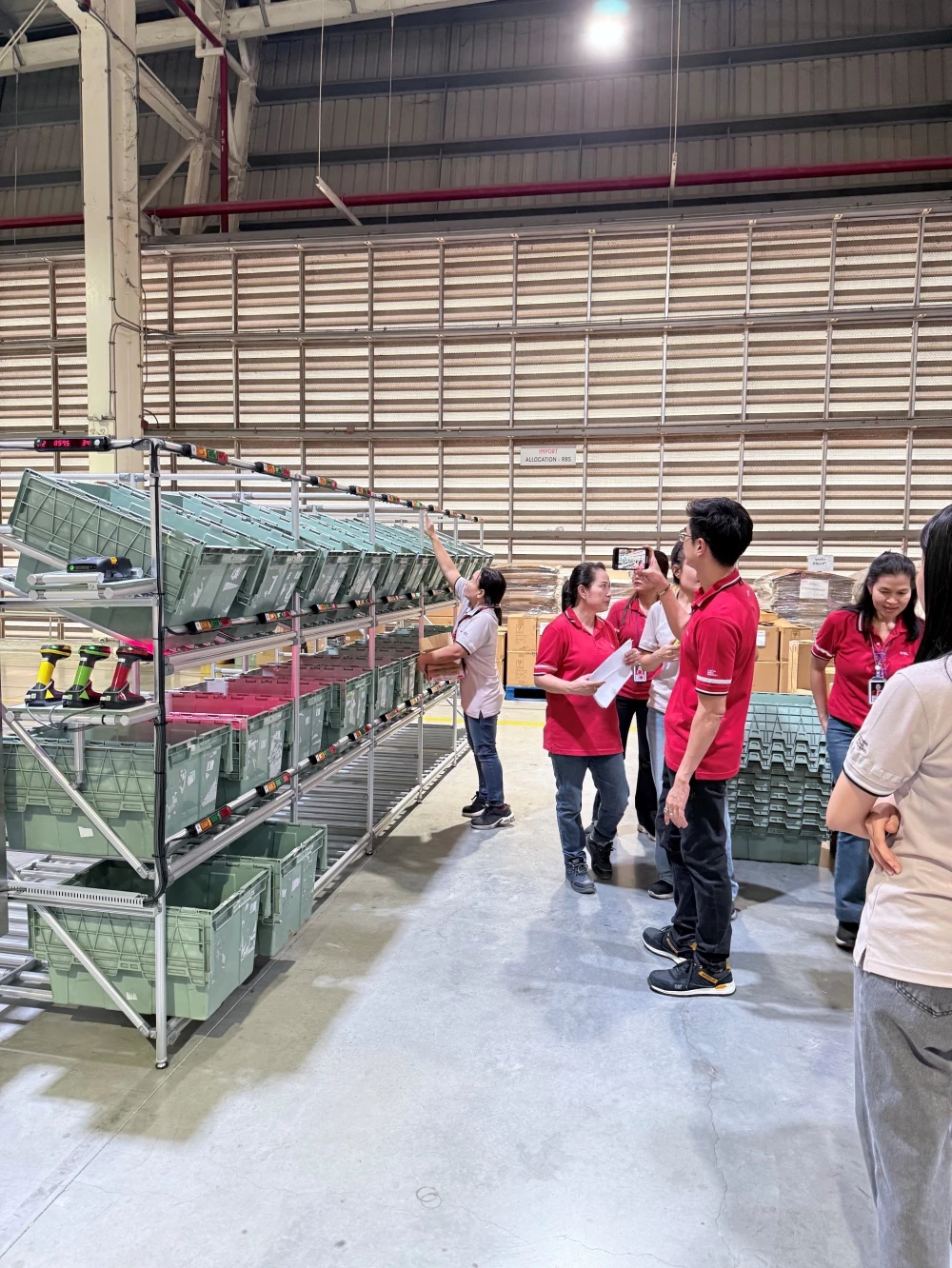
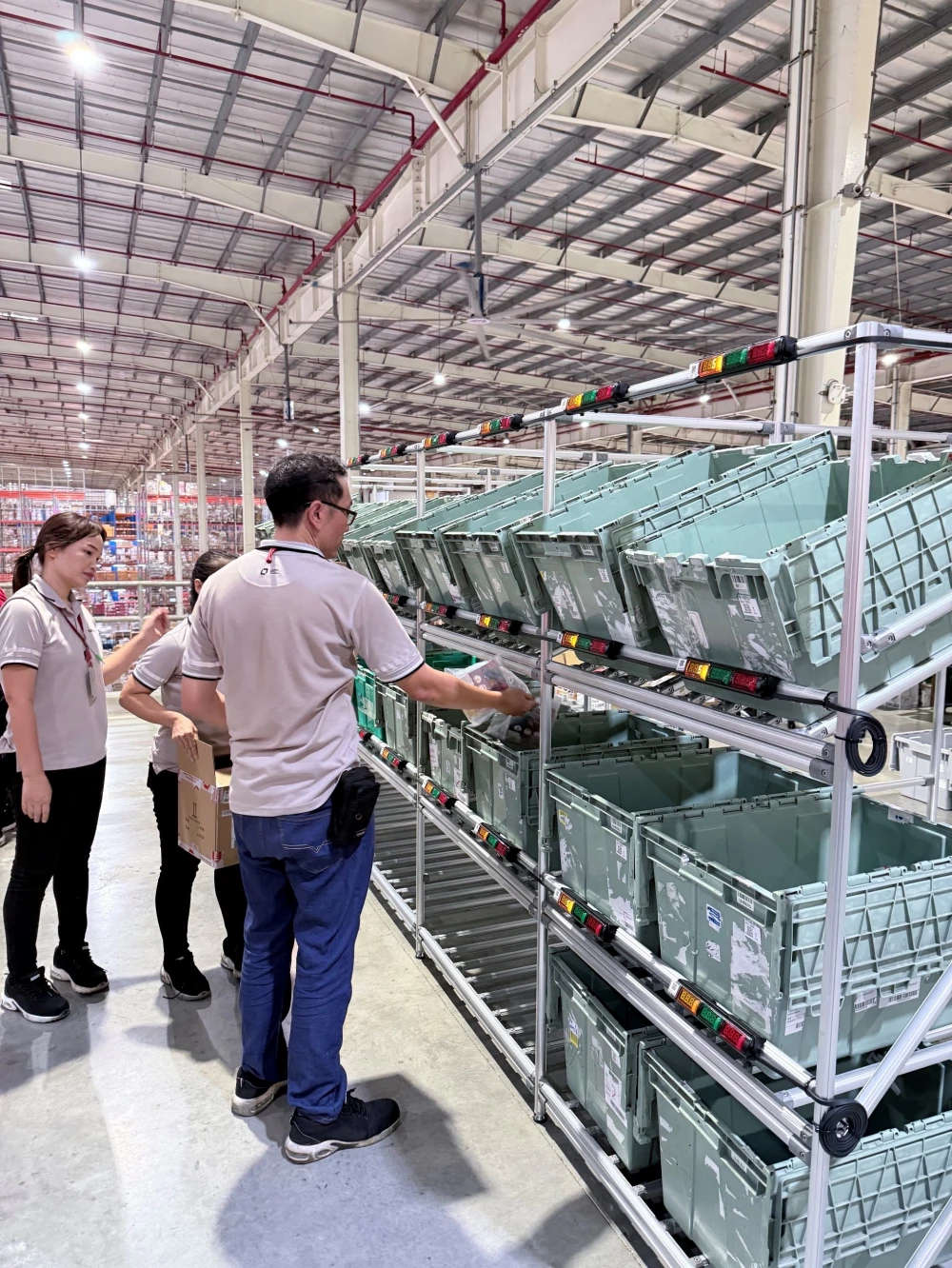
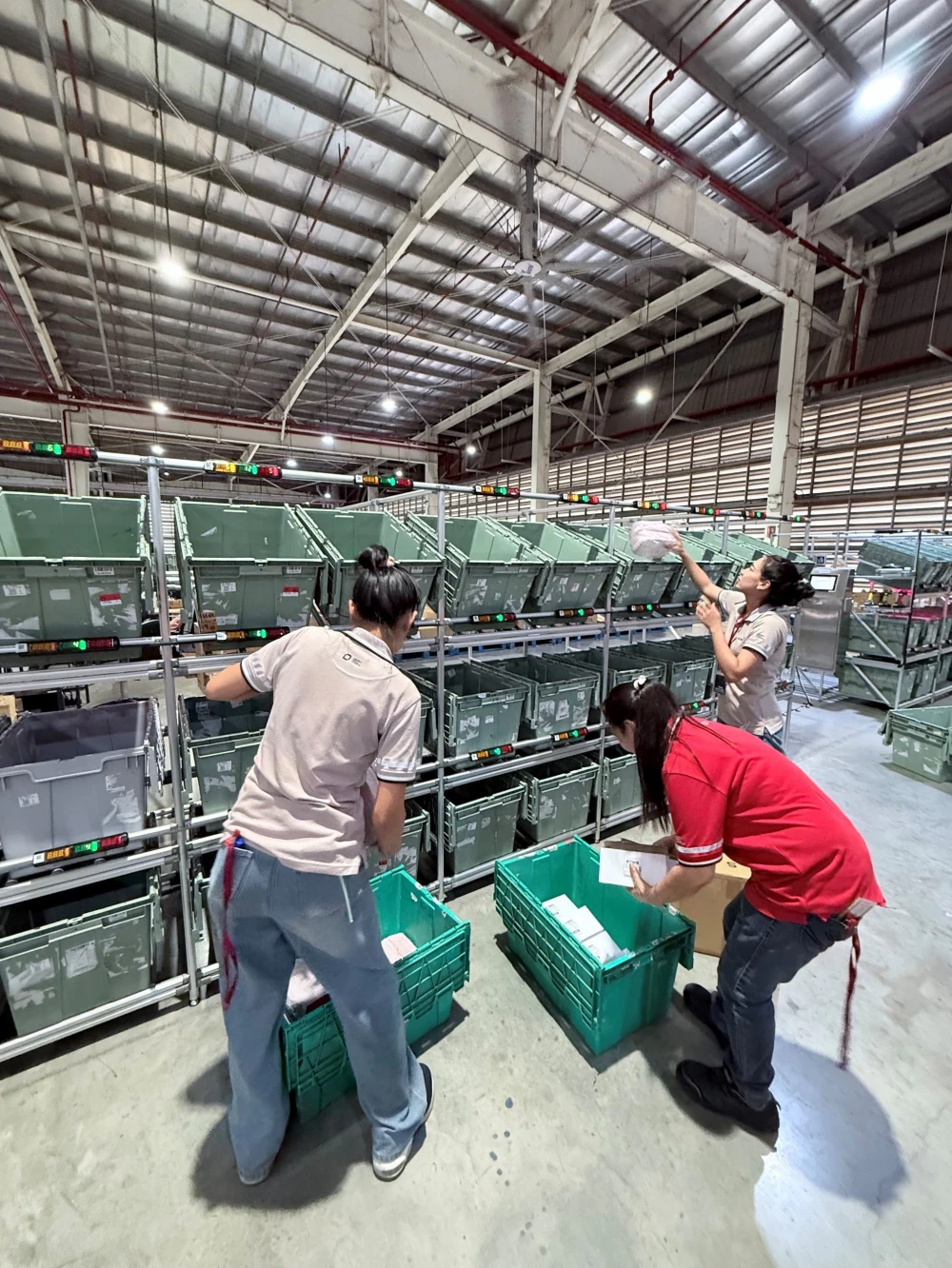
We replaced the manual floor process with a Digital Assorting System (DAS), commonly known as Put-to-Light, utilizing flow racks equipped with light indicators.
The Streamlined Workflow:
Scan: The operator scans the item's barcode.
Light Up: The system processes the data and instantly illuminates the light module at the correct destination slot.
Put & Confirm: The operator places the item in the lit slot and pushes the button to confirm the action.
The Put-to-Light system is fully integrated with the Warehouse Management System (WMS), eliminating unnecessary manual steps and significantly improving data accuracy throughout the pre-distribution process.
This system effectively eliminates "decision fatigue." Operators no longer need to manually verify sizes or colors; the software directs them to the exact location with 100% precision.
3. Investment Logic: Strategic Value & Scalability
From a Project Management perspective, the 2.24 MTHB investment was analyzed not just on immediate returns, but on Total Cost of Ownership and Scalability.
Financial & Operational Metrics: The project yields an estimated cost saving of 0.54 MTHB/year (via reduced FTE and associated costs), with an IRR of 15% and a Payback Period of 4.2 years.
The "Software-First" Strategy: While a 4.2-year payback might seem like a mid-to-long-term return, it is crucial to understand that a significant portion of this initial investment went into developing the Core Software Logic.
Strategic Insight: Future expansions will be significantly more cost-effective. As we have already developed the software architecture, rolling out new stations or expanding to other zones will only require hardware investment, drastically lowering the marginal cost.
Performance Gains: Beyond the financials, the system has reduced operating time by 30-50%. This efficiency is vital for import goods, ensuring they reach the sales floor faster than ever before.
4. Conclusion & Future Roadmap
The installation of the Put-to-Light system at SCDC1 is more than a hardware upgrade; it is a complete Process Redesign. The result is a more efficient workflow, improved employee well-being (ergonomics), and minimized distribution errors.
What's Next? The Warehouse Improvement Team is looking ahead. We plan to leverage this established software logic to manage Bulky Items in the near future. This expansion will further validate the initial investment, creating an Economy of Scale that benefits the entire organization in the long run.
#CRL #Transport #Logistics