




News and Articles
Transforming AI from "Hype" to a "Cost-Cutting Secret Weapon" in Supply Chain
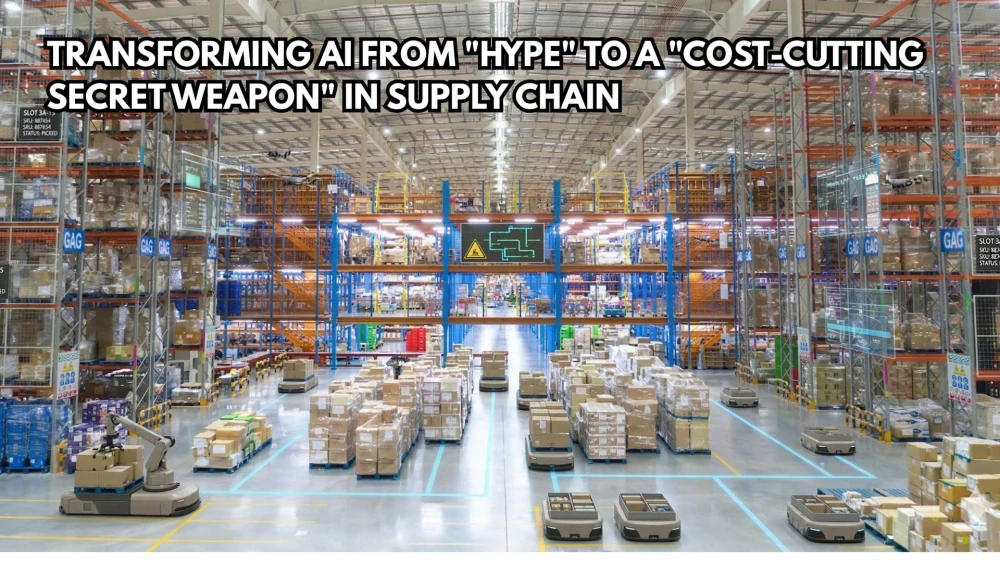
In an era where everyone is talking about Artificial Intelligence (AI), the crucial question for Supply Chain and Logistics professionals is no longer "What is AI?", but rather, "How can we use AI to solve real-world pain points today?"
For businesses where a 1-minute delay in decision-making or a 1-baht increase in costs can massively impact profitability, adopting AI shouldn't just be a beautiful theory—it must be tangible and measurable. This article from Central Retail Logistics (CRL) will take you beyond the technical jargon to explore practical, action-oriented AI use cases in the logistics battlefield, complete with real-world case studies from Thailand and around the globe, as well as CRL's next steps that you can adapt for immediate use.
1. Reducing Empty Backhauls and Enhancing Safety with AI Control Towers
- The Traditional Problem: Managing a massive fleet of transport vehicles often leads to "Empty Backhauls," wasting fuel costs and making it difficult to monitor driving behavior.
- The Practical Application: Upgrading the traditional Control Tower to work alongside AI and Telematics to analyze real-time data, breaking through the limitations of human oversight to see the entire operational picture.
Case Study: (SCGJWD Logistics, Thailand) SCGJWD Logistics uses Telematics technology integrated with an AI-driven Control Tower to manage thousands of delivery routes. The system analyzes routes and matches return trips to minimize empty runs. Additionally, an AI Monitor detects driver behavior; if a driver exceeds the speed limit or shows signs of fatigue, the system instantly sends alerts, effectively saving energy and reducing accidents.
(Source: SCGJWD Logistics Sustainability Report 2023-2024)
2. Giving Eyes to Warehouse Conveyors with Computer Vision (Automated Sorting)
- The Traditional Problem: Sorting a massive volume of parcels manually is time-consuming, creates bottlenecks, and often leads to scanning or reading errors.
- The Practical Application: Installing AI cameras (Computer Vision) on conveyor belts, allowing AI to scan and process information instead of relying on human eyes.
Case Study: (Flash Express, Thailand) Flash Express relies on AI and Computer Vision technology to develop an Automated Sorting system in its large distribution hubs. AI cameras scan barcodes and classify parcels by zip code at extremely high speeds while they move along the conveyor belt. This technology reduces human error and enables the company to handle millions of parcel deliveries daily.
(Source: Techsauce - Thailand's First Unicorn Flash Group)
3. Moving Away from Intuition to AI Demand Forecasting (Hyper-Accurate Demand Forecasting)
- The Traditional Problem: Stocking branch inventory often relies on past sales data combined with personal experience, which frequently results in either "out-of-stock" or "overstock" situations.
- The Practical Application: AI can analyze multi-dimensional data simultaneously, such as weather conditions, marketing campaigns, and social media trends.
Case Study: (Walmart, Global) Global retail giant Walmart uses Machine Learning to analyze historical sales data tied to weather forecasts. The AI uncovered a fascinating insight: when a hurricane warning is issued, people don't just stock up on water, but also on "Pop-Tarts" (a toaster pastry). The system automatically triggered the distribution of these products to branches in high-risk areas in advance, ensuring uninterrupted sales and optimal warehouse space utilization.
(Source: OpenStax - Data Science in Practice)
4. Central Retail Logistics (CRL) and Our Proactive Steps in AI-Driven Operations
For Central Retail Logistics (CRL), we are not merely studying trends; we are actively planning and promoting the "hands-on" implementation of AI within our organization through pilot projects aimed at directly solving operational pain points. For example:
- AI Document Workflow (Smart Import Document Assistant): Reducing the complexity of import documents that come in various formats. AI is brought in to review, extract data, and compare accuracy. Then, expert staff perform a final verification (Human-in-the-loop) to approve whether the data proceeds to the next step, drastically cutting down manual working hours.
- AI Damage Grading (Assessing Product Damage via Photos): Currently in the experimental phase, AI is being trained to recognize and memorize various types of product damage. In the future, when frontline staff encounter damaged goods, they simply "take a photo," and the AI will immediately help grade and assess the severity of the damage, creating a highly accurate and rapid standard.
Although some projects are still under development and testing, CRL's clear stance is that we recognize the importance of developing "people" to be proficient AI users. We do not aim to build technology to replace humans; rather, we aim to create an environment and provide tools that up-skill our team, enabling them to work more efficiently and smartly.
Action Plan: How to Successfully Start Using AI in Your Organization
If your organization is ready to dive in, here are 3 golden rules for implementing AI in the Supply Chain:
- Standardization is Key: AI requires clean and organized data (Garbage in, Garbage out). For instance, initiate a project to standardize all Inbound Goods labels to a single format. When all suppliers use the same standard label, AI cameras and WMS systems can operate swiftly and seamlessly.
- Pick the Right Pilot Project: Do not try to change everything at once. Select a process that consumes the most time or incurs the highest cost (e.g., import documentation or goods receiving) as your pilot project to create a Quick Win and show tangible results to your team.
- AI is an Assistant, Not a Contractor (Human-in-the-loop): Position AI as a "Copilot" that helps process massive amounts of data, while leaving the final verification and decision-making to the skills and experience of human employees.
In a Supply Chain world that grows more complex every day, AI is not a thing of the future, but a present-day "competitive advantage." At Central Retail Logistics (CRL), we firmly believe that integrating smart technology with standardized workflows and human potential is the key to unlocking the true capabilities of Thai logistics and sustainably pushing beyond traditional boundaries.