



News and Articles
Cooking Paper Standards: A New Challenge for Importers of Food and Household Products
What Importers Need to Know About Bringing Cooking Paper into Thailand Under TISI Requirements
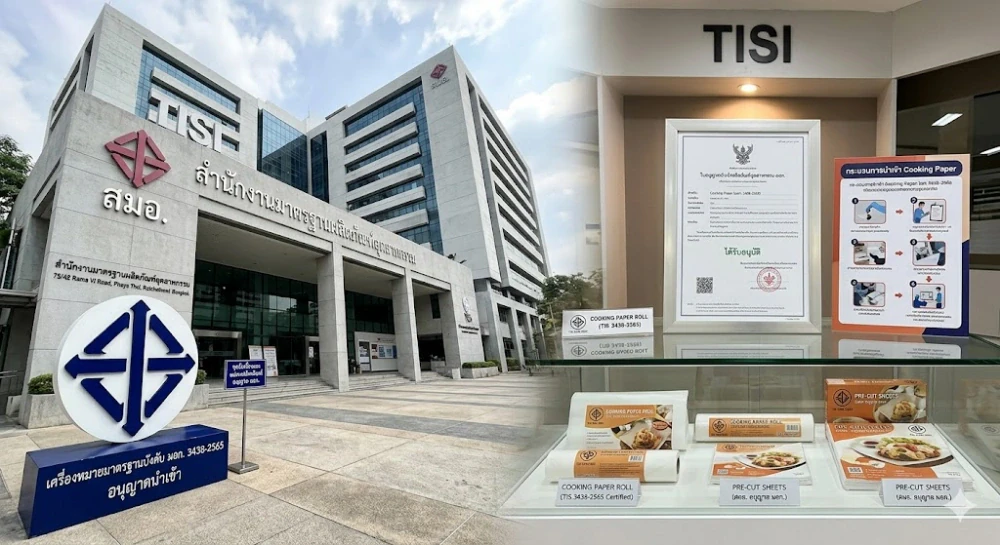
The importation of cooking paper into Thailand has become an issue that business operators need to monitor closely. The Thai Industrial Standards Institute, or TISI, has raised the level of regulatory control over food-contact paper and paper used for cooking with heat, requiring such products to meet safety standards before they can be imported and sold in the Thai market.
For importers, this change is not merely a matter of documentation. It is directly related to consumer safety and compliance with Thai industrial laws. If the products do not meet the required standards, imports may be suspended, or the importer may be subject to legal penalties.
What Is Cooking Paper?
In the context of Thai standards, cooking paper refers to paper that comes into direct contact with food, including paper used for lining, preparing, heating, or cooking food. Examples include air fryer liners, baking or parchment paper, coffee filter paper, and food wrapping paper used for heating or cooking.
These products fall under key TISI standards, such as TIS 2948-2562 for food-contact paper and TIS 3438-2565 for food-contact paper used for cooking with heat.
Why Is It Being Regulated?
The main reason for regulating cooking paper is to prevent the risk of hazardous substances contaminating food during use, particularly heavy metals and chemicals used in the manufacturing process.
The standards require control over the levels of lead, mercury, cadmium, and chromium, as well as fluorescent whitening agents and antimicrobial substances used in production. These substances must not exceed the specified limits, and raw materials must be of a grade suitable for food contact.
Requirements for Importers
Importers must ensure that the products they import comply with the relevant Thai standards and that complete certification documents can be provided before the products are distributed or sold.
For paper used with heat, the product must also pass testing at a maximum temperature of 175 degrees Celsius to confirm its safety under actual high-heat conditions.
In addition, importers should prepare product labels, technical product details, and certificates related to industrial standards in advance. This will help avoid issues with customs clearance and inspections by regulatory authorities.
Impact on Import Businesses
TISI’s measures will help raise the quality of products in the market. On the other hand, importers will likely face higher costs related to product testing and certification.
However, these measures also support fair competition. Business operators who import low-quality or non-compliant products will not be able to compete with products that meet safety standards in the long term.
Regulatory Trends in Thailand
Information published in 2025 indicates that Thailand is moving toward classifying food-contact paper and paper used for cooking with heat as controlled products, with enforcement expected to follow the specified timeline.
This direction reflects Thailand’s growing focus on the safety of food packaging materials. Therefore, importers of cooking paper should plan ahead by reviewing product standards, preparing certification documents, and verifying the manufacturing facilities of their suppliers.
Conclusion
Importing cooking paper into Thailand is no longer simply a matter of bringing in general goods. It involves importing products that are closely regulated by TISI from a safety perspective.
Business operators who wish to enter this product category should select products that comply with Thai standards, verify heat-resistance properties, and prepare all required certification documents before importing the products into the market. This will help ensure that the business operates legally, safely, and sustainably.