







News and Articles
AI Can Develop Apps Now: Do Logistics Organizations Still Need ERP, WMS, and TMS?
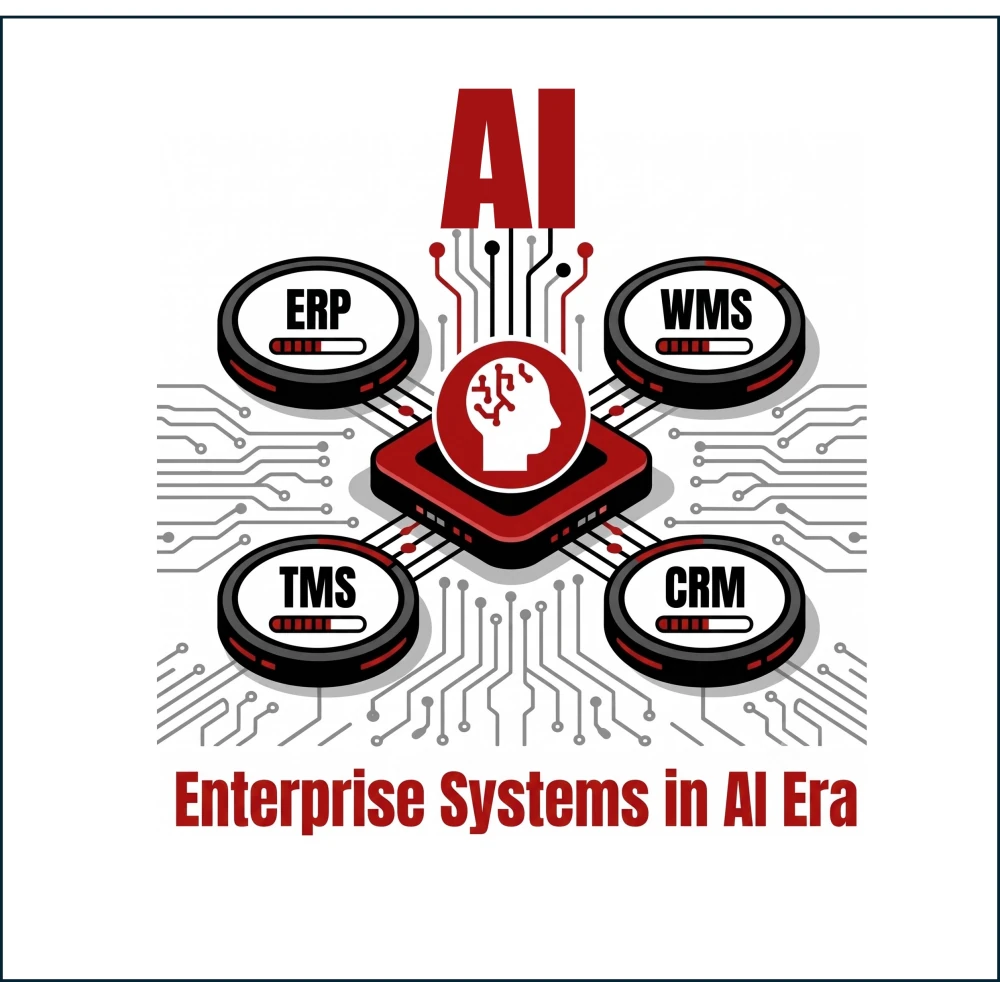
In recent years, Artificial Intelligence (AI) technology has evolved rapidly. Tools like Claude, ChatGPT, Gemini, and AI Coding Assistants can help build programs or applications in just a few days, or sometimes even within a few hours.
Many organizations have therefore started to ask the question:
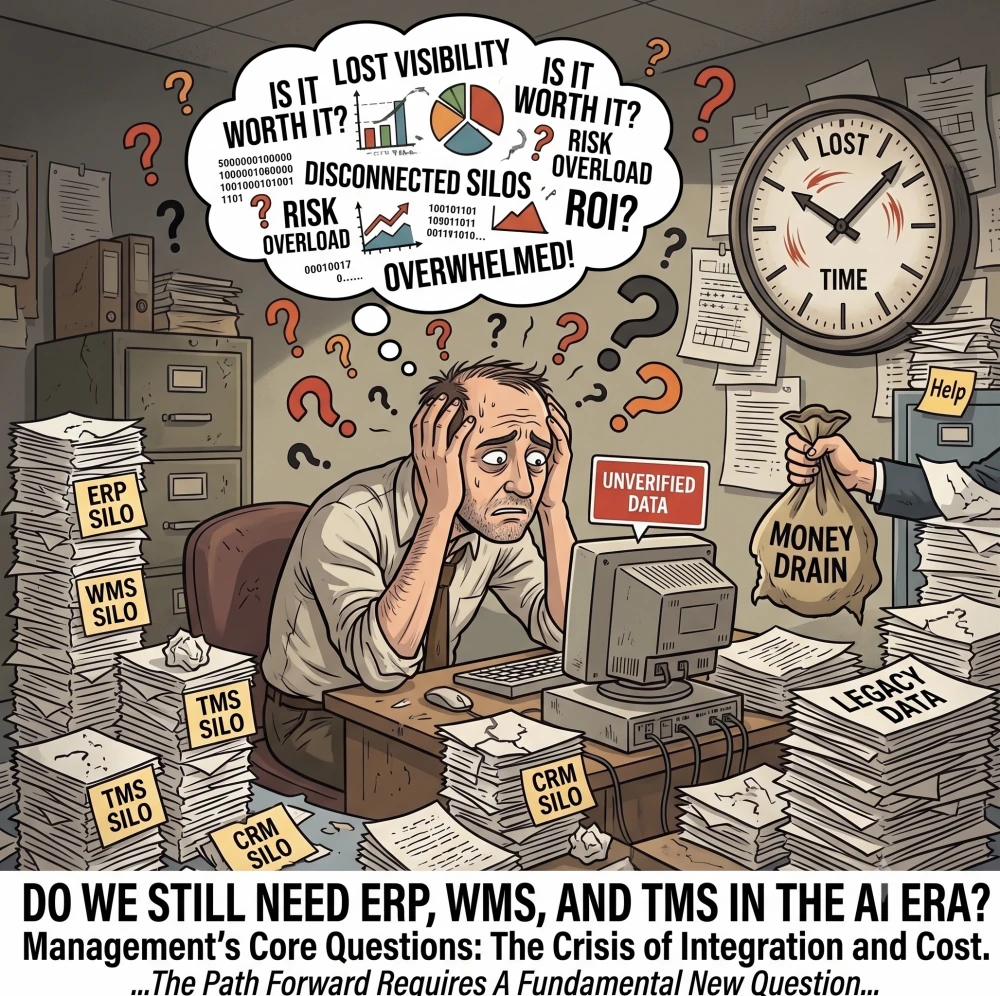
"If AI can build systems by itself, do organizations still need to invest in ERP, WMS, and TMS?"
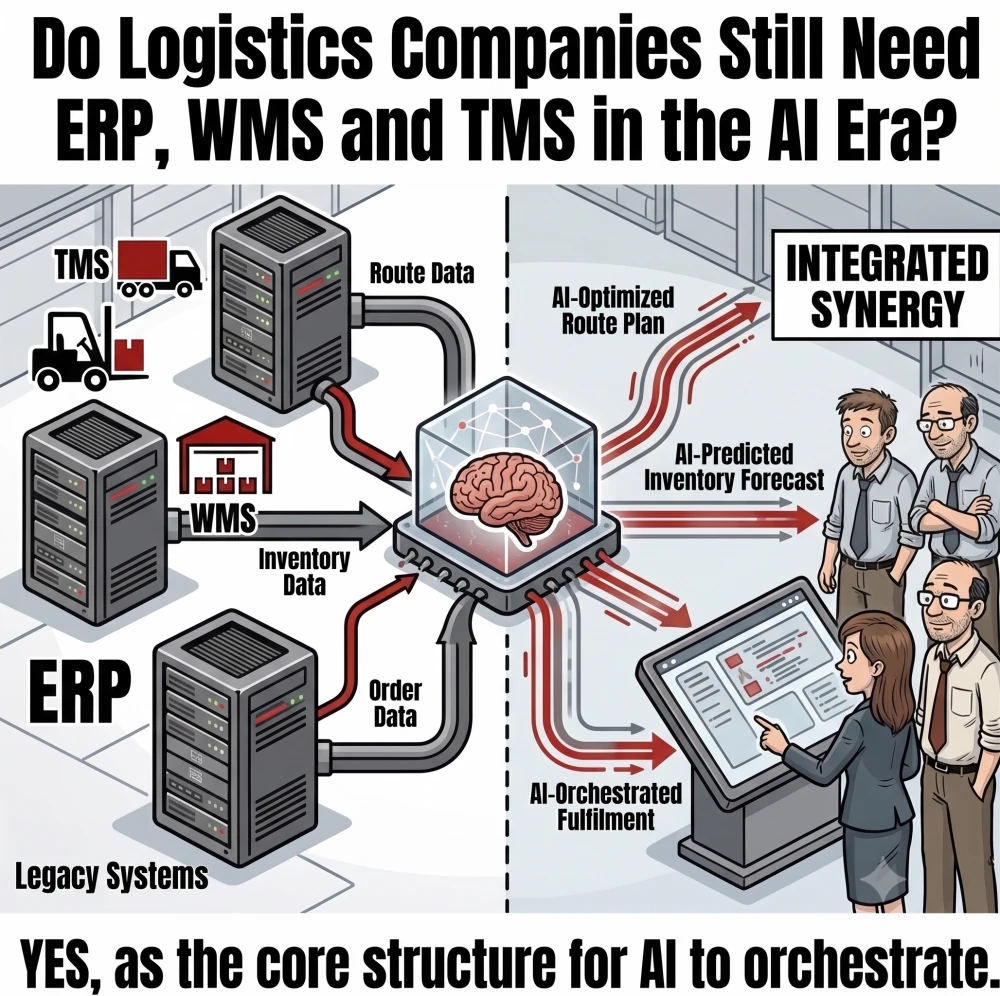
The answer is "Yes, they do." However, what is changing is the concept of choosing and developing these systems.
Why are ERP, WMS, and TMS Still Important?
Even though AI can help write code quickly, developing systems for large organizations involves much more than just coding.
The core systems of an organization still need to handle complexities in several areas, such as:
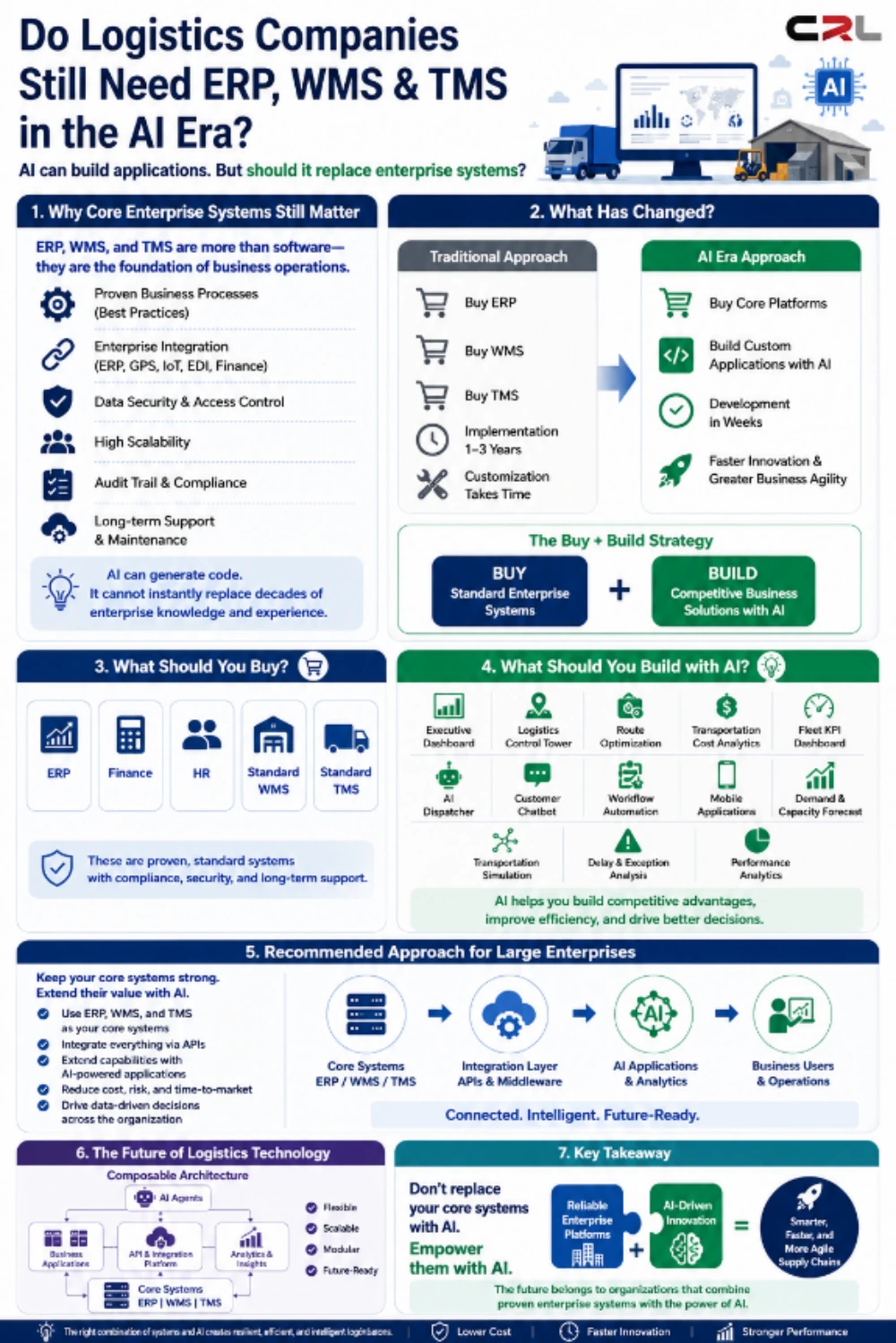
- Proven and practical Business Processes
- Standard operations (Best Practices)
- Integration with other systems, such as ERP, WMS, TMS, GPS, IoT, EDI, and accounting systems
- Data security
- Support for a large number of concurrent users
- Traceability (Audit Trail)
- Legal and regulatory compliance (Compliance)
- Long-term system maintenance and upgrades
It can be said that while AI can help build software, it cannot fully replace the experience and knowledge accumulated within standard systems.
What is Changing in the AI Era
In the past, most organizations typically chose the approach of:
- Buying ERP
- Buying WMS
- Buying TMS
Customizing the systems according to their needs
Each implementation could take several months, or some projects might take more than a year.
Today, however, the approach is shifting to:
- Using standard systems as the Core Platform
- Using AI to help develop organization-specific functions
- Continuously developing and improving the systems
This concept is known as the "Buy + Build Strategy."
In other words:
Buy what is standard, and build what makes your business unique.
Which Systems Should You Buy, and Which Should You Build with AI?
Systems suitable for buying
Standard systems required by every organization, such as:
- ERP
- Accounting and Finance systems
- Human Resources (HR) systems
- Standard WMS
- Standard TMS
These systems have been developed over a long period. They meet industry standards, support legal compliance, and have experts maintaining them.
Systems suitable for building with AI
Parts that differentiate each organization, such as:
- Executive Dashboards
- Logistics Control Towers
- Business-specific Route Optimization systems
- Transportation cost analysis
- Vehicle efficiency analysis and Fleet KPIs
- AI Dispatchers
- Customer Chatbot systems
- Workflow Approvals
- Mobile Applications for employees
- Demand & Capacity Forecast systems
- Simulation systems
AI can help reduce development time from months to just a few weeks, allowing organizations to experiment, improve, and innovate much faster.
Which Approach Should Large Organizations Choose?
For organizations with high transaction volumes, such as retail, logistics, transport providers, or distribution centers, building an entirely new ERP, WMS, or TMS from scratch using AI might not be the right choice.
A more popular approach is:
- Using ERP, WMS, and TMS as the core systems of the organization
- Connecting data through APIs and Integration Platforms
- Using AI to develop supplementary systems specifically tailored to business needs
For example:
- AI Logistics Control Tower
- AI Copilots for Planners
- AI for analyzing transportation costs
- AI for analyzing the root causes of delayed deliveries
- AI for transportation capacity planning
- AI for simulating transportation networks
- AI to help answer questions and support employee tasks
This approach helps reduce costs, minimize risks, and increase agility in long-term system development.
The Future of Logistics Systems is Heading Towards Composable Architecture
Today, many organizations are shifting from using a single massive system to adopting a Composable Architecture approach.
This concept is like putting "building blocks" together.
- Having ERP, WMS, and TMS as core systems
- Connecting through APIs
- Adding new applications as needed
- Using AI Agents to assist with specific tasks
The advantages are:
- Rapid adaptability
- Easy scalability
- Reduced impact on core systems
- Readiness for new future technologies
Conclusion
AI is not replacing ERP, WMS, or TMS; rather, it is changing how organizational systems are developed.
In the future, successful organizations won't be those that "build everything themselves" or "buy everything ready-made," but rather those that appropriately balance both approaches.
Using standard systems as a business foundation, and using AI to build innovations that meet organizational needs.
Therefore, for logistics and supply chain professionals, what matters most is not just learning how to use AI, but understanding both "business processes" and "AI application" to create new value for the organization.
Ultimately, AI will be the most powerful tool when it works in tandem with people who truly understand the business.